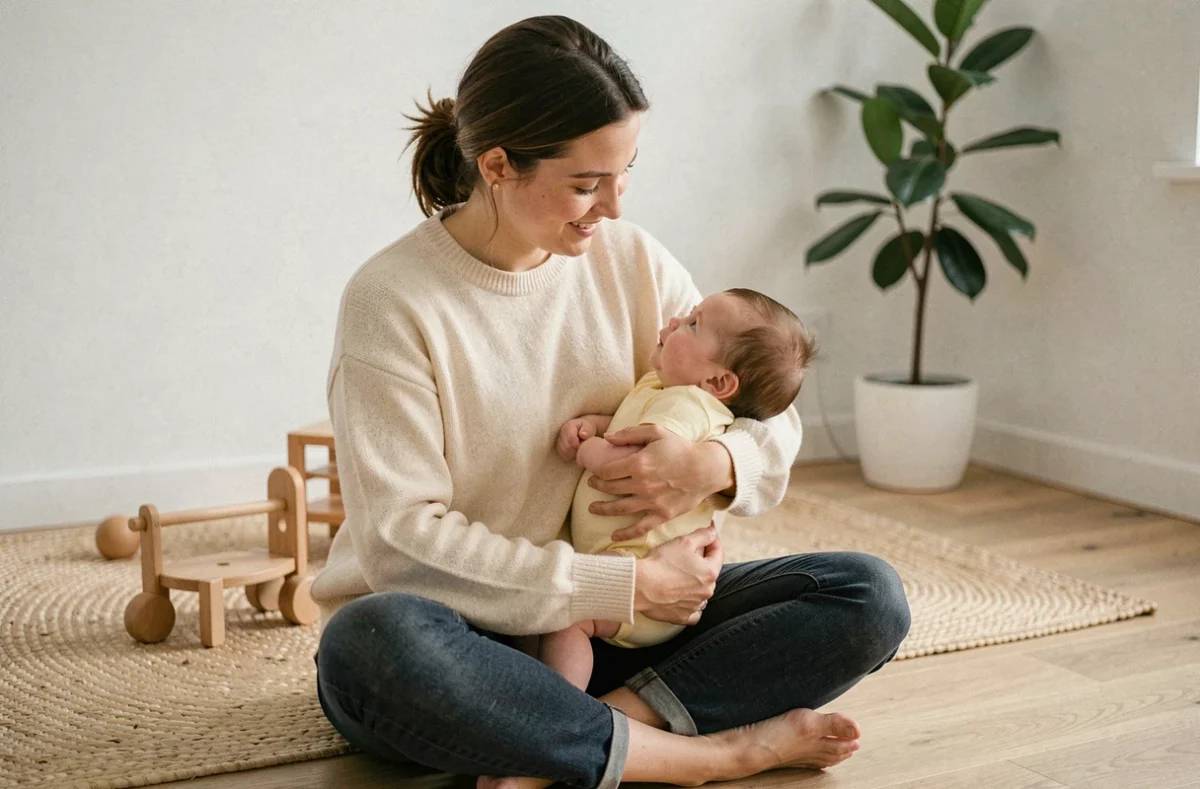
A baby who stares at their hands, who turns their head towards a voice, who grabs a crumpled fabric between their fingers: each seemingly trivial gesture is a learning experience in progress. Supporting a baby’s awakening requires neither expensive materials nor a structured program. It is mainly about knowing when to offer, when to let be, and when to stop.
Signs of fatigue in babies: knowing when stimulation becomes too much
Have you ever noticed your baby looking away in the middle of play, rubbing their eyes, or starting to whine for no apparent reason? These are not whims. They are signs of sensory overload, and they occur much faster than one might think.
A newborn just a few weeks old can only tolerate short windows of wakefulness, sometimes barely an hour. Offering an activity during these moments is appropriate. Prolonging stimulation beyond that, even with the best intentions, has the opposite effect: the baby becomes disorganized, cries, and returning to calm becomes more difficult.
Three reliable indicators to spot the limit:
- The gaze becomes fixed or turns away, the eyes become glassy. The baby “disconnects” from what they were observing.
- Movements become jerky, fists clench, the body stiffens. This is a tension that often precedes crying.
- The baby yawns, rubs their face, or tries to suck without being hungry. Their body is asking for rest.
At this stage, the best awakening activity is the absence of activity. Reduce the light, lower the volume, hold the baby close without talking. Alternating stimulation and quiet time protects development much better than a series of activities.
Appropriate awakening activities without falling into excess
Social media is full of “awakening programs” month by month, with lists of toys and timed sequences. This approach gives the impression that a child’s development depends on adhering to a schedule. In practice, a baby learns just as much by crumpling kraft paper as with a sensory toy bought from a specialty store.
For the first months of life, many resources exist, particularly on the La Vie des Mamans website dedicated to babies, which concretely addresses these everyday questions with an infant.
What really matters in an awakening activity is not its sophistication. It is its alignment with what the baby is ready to do at that precise moment. A child who is starting to grasp objects does not need a multifunctional toy. A lightweight wooden ring, a knotted fabric, or a stainless steel cup are sufficient.
Free motor skills rather than imposed postures
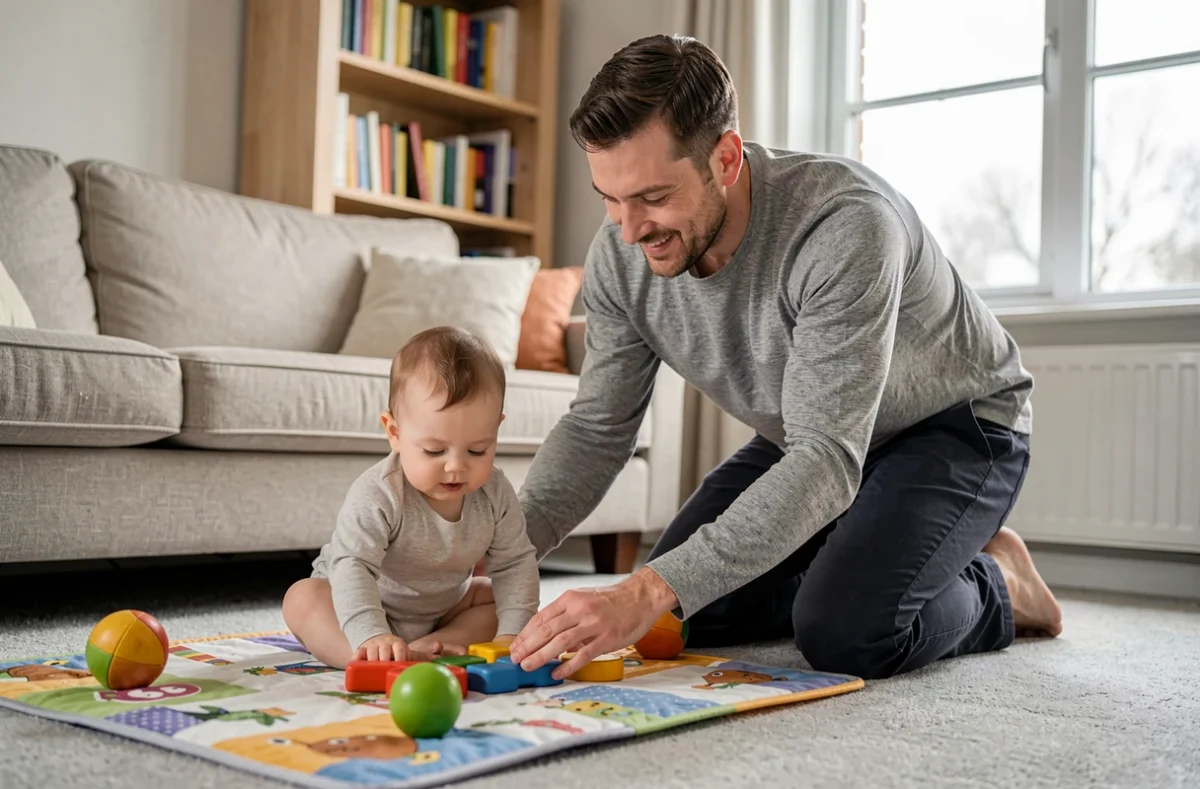
Placing a baby on their back on a firm mat, with a few objects within reach: this is the foundation of free motor skills. The baby chooses to turn their head, lift their legs, or roll to the side when they are capable.
Baby seats, activity chairs, and walkers place the body in positions that the baby has not yet mastered. A child who is not propped up to sit before they are ready develops better balance in the long term. The floor remains the best playground for an infant.
Sensorial games with what you already have
No need to invest in expensive sensory boxes. Here are some concrete examples of awakening games using household materials:
- A wooden spoon gently tapped on different surfaces (cardboard, metal, fabric) to explore sounds.
- A lightweight scarf placed on the baby’s hands, which they learn to remove. This gesture works on hand-eye coordination.
- Warm water slowly poured over the feet during bath time. The contact with water stimulates nerve endings and relaxes the body.
- The parent’s face, simply. Before four months, the human face is the most captivating visual stimulus for an infant.

Safe play space: what really changes for awakening
The environment in which a baby moves directly influences the quality of their exploration. A space cluttered with toys has the opposite effect of what one seeks: the baby flits around, cannot focus on anything, and quickly becomes bored.
Three to four objects at a time are more than enough. Change them every two or three days to renew interest without overwhelming the child. The play mat placed on the floor, in a quiet corner of the room, provides a stable reference point.
The safety of this space requires regular checks as the baby grows. A child who was crawling last week may be pulling themselves up to stand this week. Low furniture, electrical outlets, and objects left on a coffee table become risks as mobility progresses.
Baby’s daily rhythm: awakening, meals, and sleep in balance
A newborn’s rhythm of life is based on a natural sequence: sleep, meals, awakening, then back to sleep. This cycle varies from child to child, and its duration evolves each month.
Trying to schedule awakening activities at fixed times, like a school timetable, generates stress for the parent and frustration for the baby. Observing the child’s natural rhythm yields better results than imposing a schedule.
In practical terms, this means offering a game when the baby is alert, eyes open, gaze mobile. If mealtime has just finished and the baby is relaxed, it is often a good window. If the baby has just woken up and seems still groggy, it is better to wait a few minutes before bringing out the mat.
Language naturally integrates into these moments. Describing what you are doing (“I’m putting you on the mat,” “you’re grabbing the spoon”), naming objects and sensations, all nourish language development without forcing interaction. The baby absorbs words long before they can pronounce them.
Supporting a child’s awakening, in essence, is accepting that days do not look the same. A day of great exploration may be followed by a day of extended sleep. Both are productive. Development is not measured by the quantity of activities proposed, but by the quality of shared attention.