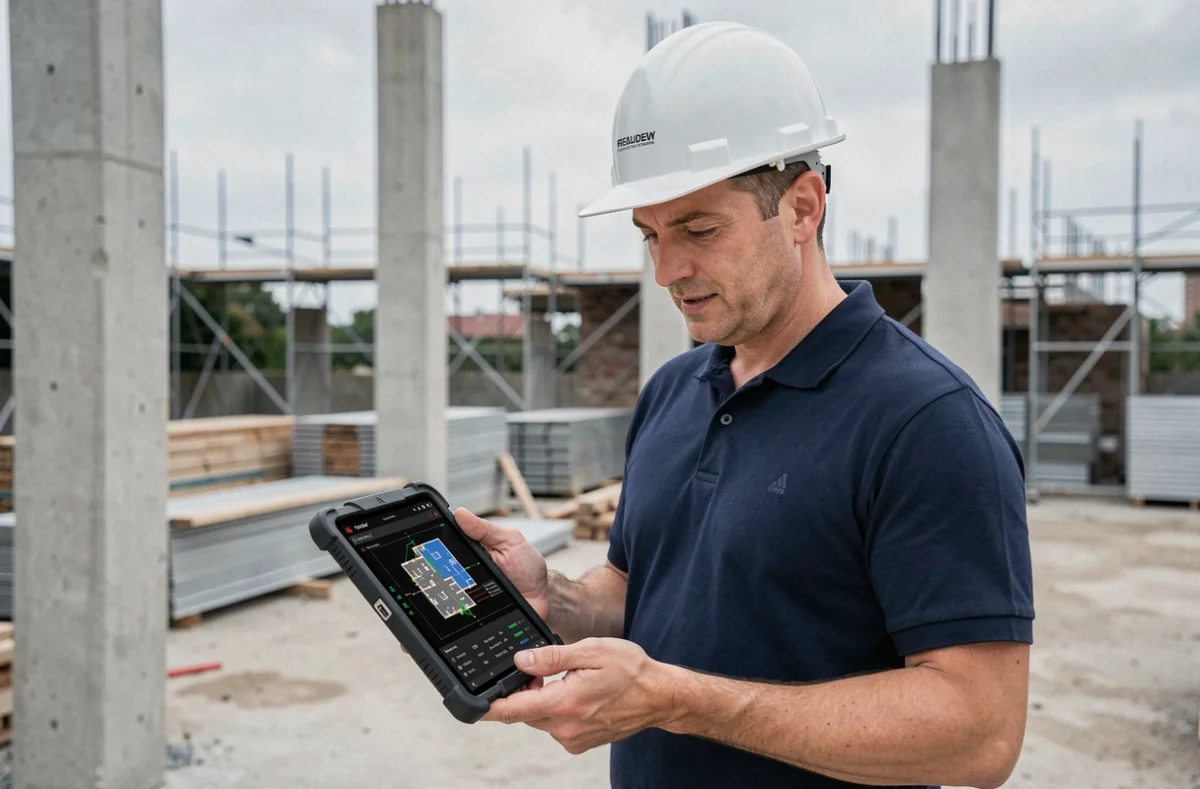
On a construction site rehabilitation in the city center, the site manager discovers that the tracking software imposed by the project owner does not manage variations of local materials. He tinkers with a spreadsheet in parallel, duplicates entries, and wastes time.
This kind of friction is encountered on the majority of construction sites where standardized digital tools do not align with the realities on the ground. This is precisely where custom digital solutions in construction make sense: adapting digitalization to operational constraints rather than the other way around.
Variable BIM Requirements: Why a Single Tool Is Not Enough on the Ground
In France, there is no general obligation for BIM. Article R. 2132-10 of the Public Procurement Code allows public buyers to require electronic modeling tools for building data, but on a case-by-case basis, depending on the type of operation and the desired level of detail.
In practice, each tender can impose a different BIM level. A company responding to three public contracts simultaneously may find itself with three distinct digital specifications. One requires a LOD 300 model delivered in IFC, another a simple digital DOE, and the third requires nothing specific.
A rigid management software, designed for a standard workflow, does not cover these variations. Configurable solutions are needed, capable of adjusting to the actual scope of the project. It is this adaptability that makes custom solutions in construction a strategic lever for companies responding to markets with heterogeneous requirements.
BIM is also progressing well beyond just the design phase. The execution and operation phases now concentrate a growing share of usage, which reinforces the requirements for data structuring and coordination between trades.

AI Literacy and European Regulation: A Ground Constraint Often Ignored
Since February 2, 2025, Article 4 of the European regulation on artificial intelligence (EU 2024/1689) requires suppliers and professional users to ensure a sufficient level of AI skills adapted to uses and risks. For the construction sector, this obligation directly concerns estimation, planning, quality control, or construction site image analysis tools.
On the ground, feedback varies on this point. Some construction SMEs are already using AI modules integrated into their management software without even realizing it (automatic document sorting, scheduling suggestions). Others discover the topic during an audit or a supplier contract renewal.
Custom digital solutions take on a regulatory dimension here. It is no longer just about adapting a tool to a business process, but about configuring software solutions to integrate:
- An AI-assisted decision traceability module, to document which parameters were generated automatically and which were validated by a human operator
- Training paths tailored to the actual role of the user (a site manager has different needs than a quantity surveyor or an administrative manager)
- Differentiated access levels based on the criticality of the data being handled, in accordance with the proportionality principle of the regulation
A generic solution, delivered turnkey without configuration, does not meet these customization obligations. The company using it remains responsible for the compliance of its uses.
Site Management and Field Data: Configure Rather Than Suffer
A standard construction management software typically offers a dashboard with progress tracking, time tracking, and document management. The problem arises when the company has specific processes: a validation circuit unique to its organizational chart, quality indicators linked to a particular certification, or report formats imposed by a client.
Custom digitalization consists of configuring these tools around existing processes rather than forcing teams to change their habits to adapt to the software. This involves personalizing workflows, data fields, alerts, and exports.

In practice, several levers allow this adaptation without developing an application from scratch:
- Advanced configuration of existing SaaS software (rights, custom fields, conditional automations), which covers most needs without coding a line
- API connectors between business tools (accounting, planning, BIM model), which avoid double entry and ensure data reliability at the source
- Complementary modules developed by specialized construction integrators, capable of adding a missing functionality to an existing software base
Data flows better when the tool aligns with the business process, not the other way around. A site manager who finds the same steps in his mobile application as in his field routine enters his data faster and with fewer errors.
Data Security and Quality: Customization as Protection
Centralizing construction site data in a digital tool guarantees nothing if access rights are poorly configured or if backups do not cover the right scopes. Construction companies handle sensitive information: execution plans, client data, structural surveys, control reports.
Custom data security configuration allows defining who sees what, who modifies what, and who exports what. On a site involving multiple subcontractors, each participant accesses only the resources necessary for their lot. This compartmentalization reduces the risks of leaks or accidental modifications.
The quality of the data also depends on how it is collected. A field form that is too long will be bypassed. A form that is too short will lack information to feed the reporting. Customization also means calibrating these input interfaces as closely as possible to the real needs of each trade.
The digital transformation of construction is not about choosing between software A or software B. It is about the ability to adapt the tool to the site, to the team, to the market. Companies that invest in this customization gain in data reliability, regulatory compliance, and adoption by field teams.