
You pack your suitcase, tighten a colorful strap around the shell, and head to the airport. Everything seems simple. However, this strap can cause problems when going through baggage handling if it does not meet certain technical constraints related to automated sorting systems. Understanding the standards for airplane luggage straps avoids unpleasant surprises, from baggage being stuck on the conveyor belt to the airline refusing liability in case of damage.
Airport Sorting Systems: Why Your Strap Can Block the Conveyor
Even before being loaded into the hold, your suitcase goes through an automated sorting circuit. Conveyors, scanners, and mechanical switches move it at high speed throughout the airport.
A poorly adjusted strap, with a protruding buckle or a dangling end, can get caught in these mechanisms. The baggage then gets ejected from the circuit, delayed, or even damaged. In this case, the airline may refuse any compensation.
American Airlines, for example, specifies in its transport conditions that damages related to protruding parts or accessories added to the baggage are the passenger’s responsibility. Other airlines have similar clauses. The principle is the same everywhere: if your strap obstructs the conveyor or obscures the flight tag, it is considered poor baggage preparation. To better understand the standards for airplane luggage straps, several technical criteria deserve attention.
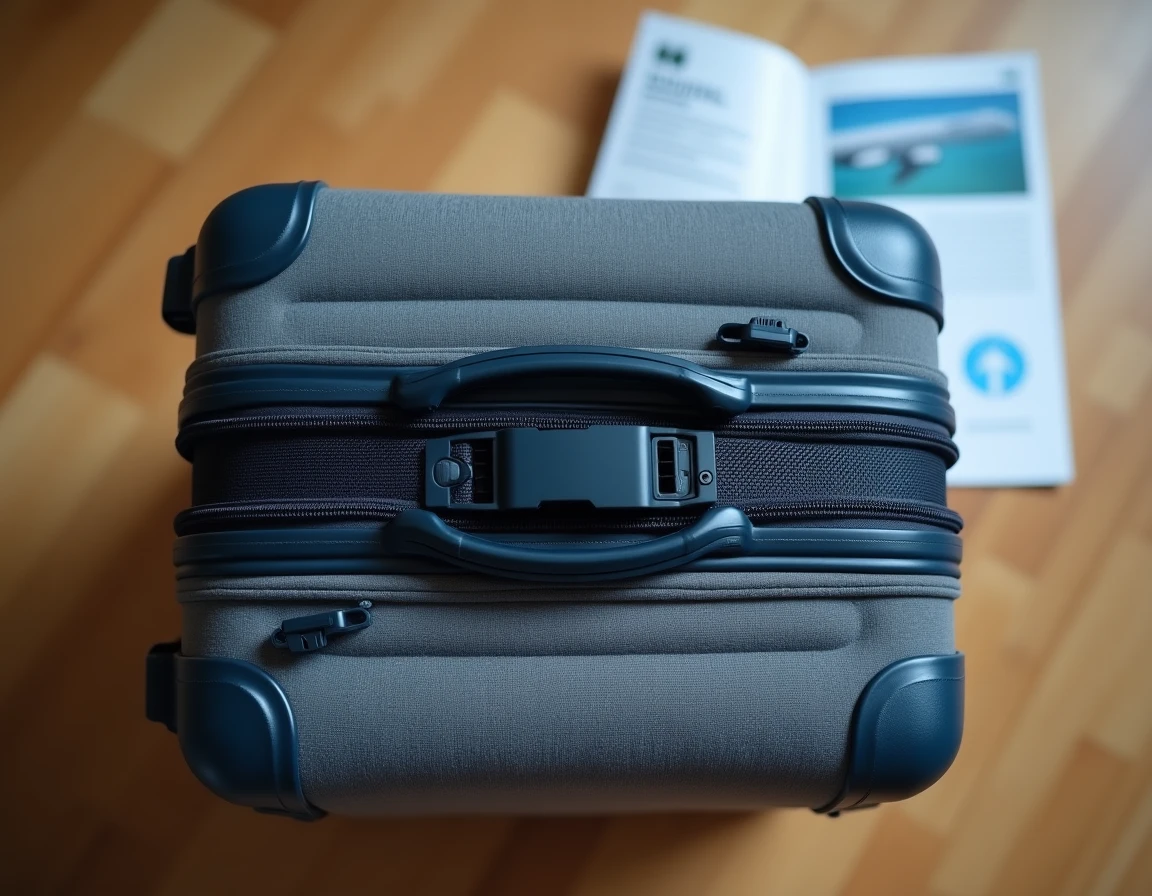
You may have noticed that barcode tags are stuck on the handle or side of the suitcase? The automated sorting scanners read these codes to direct each piece of luggage to the correct flight. A strap that covers the tag prevents reading. The baggage then goes for manual processing, which extends the delay and increases the risk of loss.
Luggage Strap with or without TSA Lock: What Security Requires
Airport security agents can open any checked baggage for inspection. In the United States, the TSA (Transportation Security Administration) has this systematic right. If your strap is secured with a standard lock, agents will cut it without hesitation.
This is why TSA-approved straps exist. This type of lock has a universal key that agents can open with a pass. Your strap remains intact after the inspection, and you find it in place upon arrival.
Simple Strap or Locked Strap: What Use for Which Flight
On a domestic flight in Europe, a strap without a lock is sufficient in most cases. Its main role is to keep the suitcase closed if the zipper fails during handling. However, for a flight to the United States or Canada, a TSA-compatible lock is the only reasonable option.
A strap with a non-TSA lock on a flight to New York is a strap you will find cut or missing. Investing in a TSA model costs just a few extra euros for real peace of mind.
Criteria for Choosing a Compliant Luggage Strap for Air Travel
Not all straps sold online are created equal. Certain features determine whether your strap will pass inspections without issues or create complications.
- Sufficient width and flat buckle: a wide strap (at least the width of a belt) with a flat buckle limits the risk of snagging on sorting conveyors.
- Adjustable length with securely fastened excess: the free end of the strap should be folded and secured, never dangling. A piece of fabric sticking out by several centimeters is the primary cause of blockage on a conveyor.
- Bright color for quick identification: the strap also helps spot your suitcase on the carousel. A strap in a distinct color (red, yellow, orange) serves this function without adding technical risk.
- CE marking or equivalent: this marking certifies that the buckle and textile meet minimum strength requirements. Its absence does not make the strap illegal, but it indicates a product that has not undergone documented quality control.
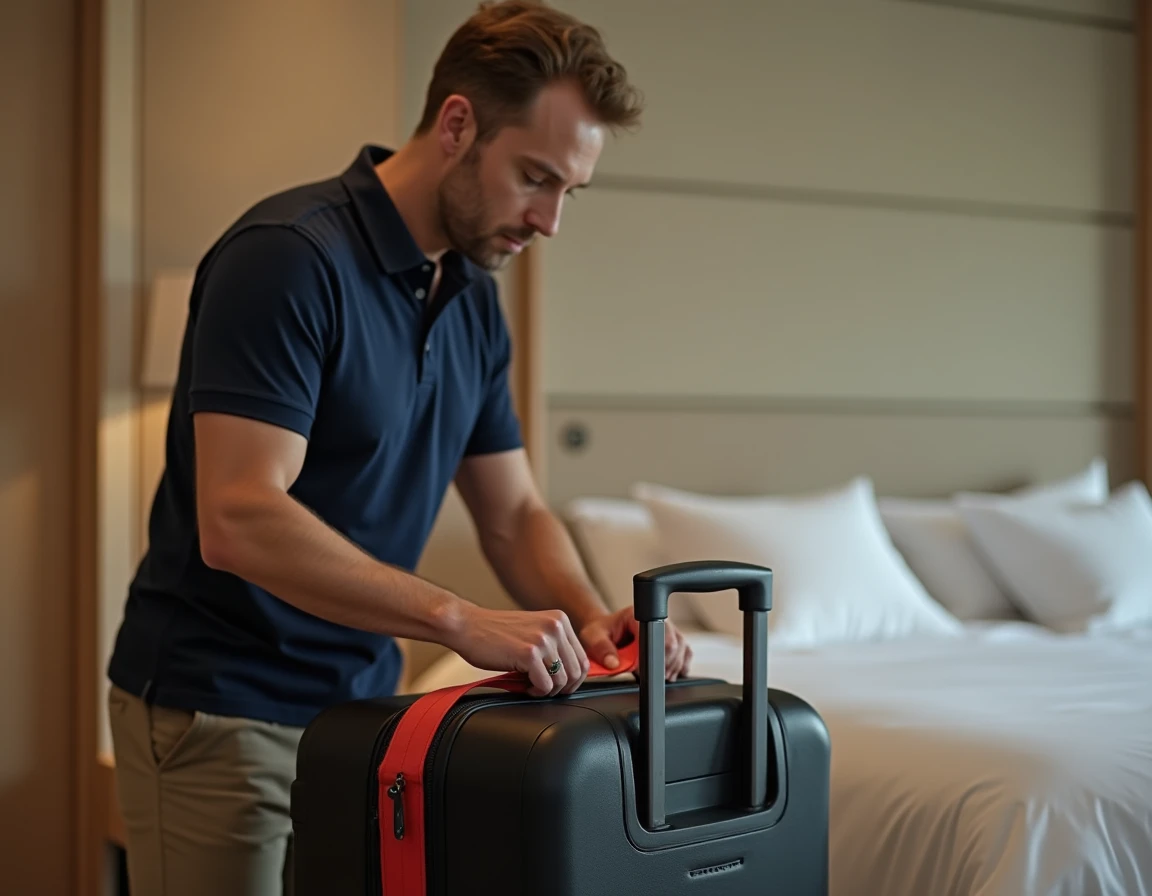
Correct Strap Placement: Mistakes That Cost a Baggage
Placing a strap seems obvious. In practice, a few mistakes keep recurring and turn a useful accessory into a source of problems.
First mistake: placing the strap across the retractable handle. During sorting, handles are sometimes grabbed by mechanical hooks. The strap should never cover the handle or obstruct its movement.
Second mistake: positioning the buckle on the side of the flight tag. Ideally, the buckle should be placed on the side opposite the tag or on top of the suitcase, to keep the barcode visible and readable by scanners.
Quick Check Before Check-In
Before dropping off your suitcase at the counter, three checks take less than ten seconds:
- Pull on the strap to confirm it is tight and that nothing is dangling.
- Check that the barcode tag (stuck by the agent) remains fully visible once the strap is in place.
- Ensure that the buckle is flat against the shell, with no protruding angles.
These simple gestures significantly reduce the risk of your baggage being removed from the sorting circuit or arriving damaged.
The luggage strap remains a useful accessory for keeping a fragile zipper closed and quickly identifying your baggage. The condition is that it is suitable for the flight (TSA lock for destinations that require it), properly adjusted, and placed without obscuring the tags. A well-prepared piece of baggage passes through sorting systems smoothly, and the airline has no reason to contest its liability in case of a problem.