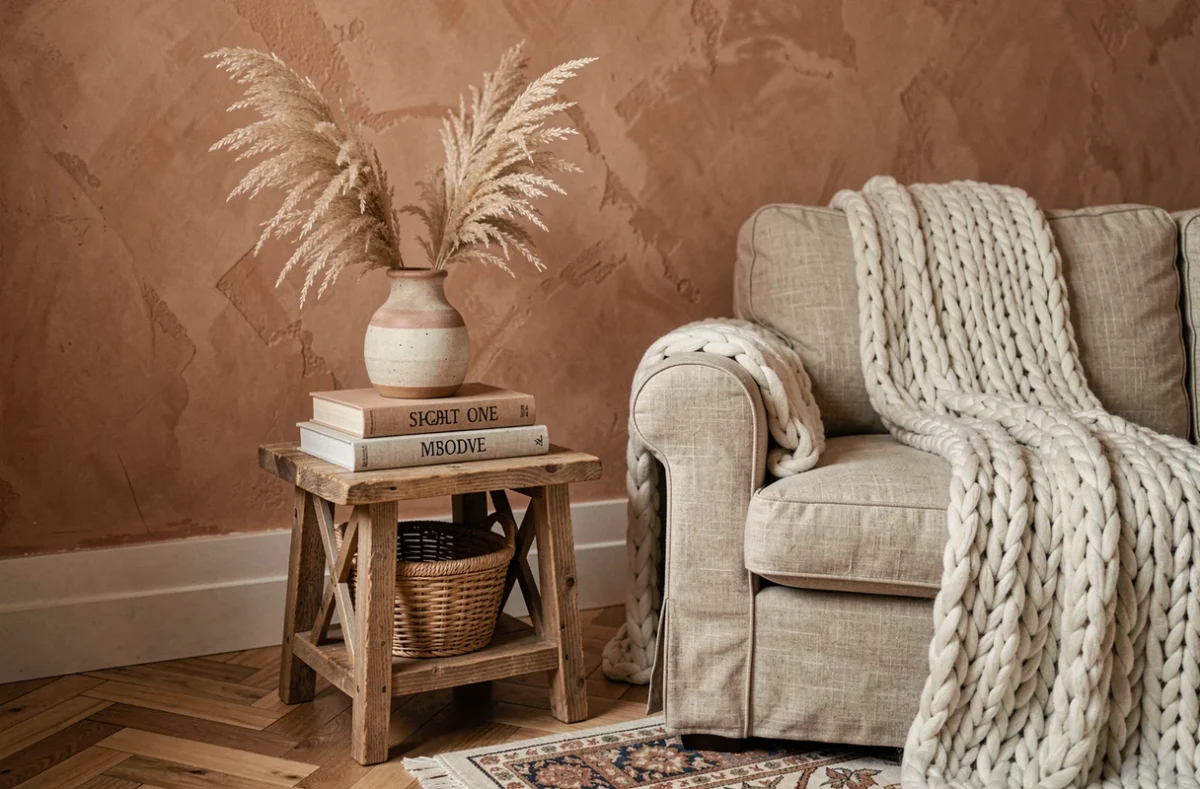
A throw draped over an armchair, a piece of pottery picked up at a market, an old wooden frame found at a weekend flea market: a warm, inviting home often comes down to a few objects that tell a story. The trick is not to accumulate too many or choose pieces that don’t work together. Creating a cosy interior with carefully chosen objects takes a little planning, especially when mixing new items, second-hand finds and handmade pieces.
Second-hand and handmade objects: check before you decorate
Have you ever noticed how an antique mirror or a brass lamp found at a flea market can instantly give a room character? Buying second-hand has become a popular way to decorate differently in France. Reuse centres and social and solidarity economy organisations offer affordable objects, many of which are hard to find in shops.
Before buying a second-hand piece of furniture, it’s worth checking what it’s made of. French regulations require labels to distinguish solid wood from veneer and melamine finishes. A wood-like appearance doesn’t guarantee solid wood: turn the piece over, read the label and feel the edges. Peeling veneer or a particleboard panel swollen by moisture won’t last.
As for handmade objects (ceramics, woven pieces and small handcrafted furniture), Côté Maison reports renewed interest in these unique pieces, which combine traditional craftsmanship with contemporary interiors. A single piece of pottery on a shelf makes more of a visual impact than a matching set of candle holders bought as a bundle. Online catalogues such as https://www.lapetitedeco.com make it easy to browse this kind of decorative piece before heading out.
Colours and materials for a cosy feel without the clutter
Why do some rooms feel welcoming as soon as you walk in, while others still feel cold despite all the decor? The answer often lies in the colour palette and materials, not the number of objects.
Start with the colours you already have
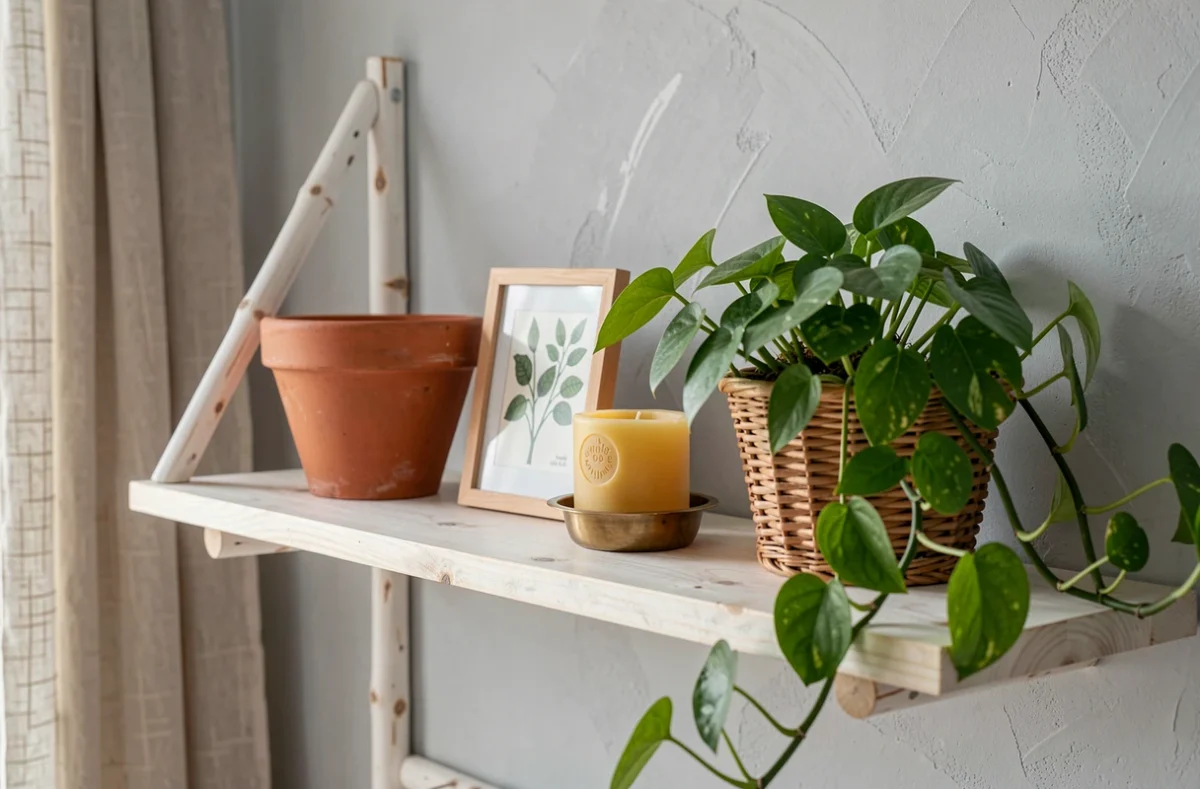
Before adding anything, take a look at your living room or bedroom. The sofa, floor and curtains set the tone. Every new object should complement this existing backdrop, not clash with it. If your sofa is light grey, a terracotta pot or ochre cushion will add warmth without creating a visual clash.
Warm colours (terracotta, beige, taupe and shades of brown) create a sense of intimacy. Sometimes, painting a wall in one of these shades is enough to transform the feel of an entire room.
Mix textures rather than objects
Visual comfort comes from a variety of textures in the same space. A wool throw on a leather armchair, a wicker basket beside a raw wood table, a linen cushion next to a stoneware vase: these tactile contrasts create a sense of warmth.
- Wood (solid wood, not just a printed finish) adds a natural grounding element. A small second-hand walnut or oak piece often makes more of an impact than a new particleboard one
- Thick textiles (washed linen, bouclé wool and corduroy) absorb light and soften the lines of a room
- Mineral materials (stoneware, glazed ceramics and stone) add visual weight and an interesting contrast with fabrics
Three different materials in one room are enough to create visual richness. Beyond that, the eye no longer knows where to settle.
Lighting and arranging decorative objects in a living room
Lighting dramatically changes how a space feels. A room lit by a single central ceiling light will always seem colder than a living room with several light sources.
Adding several low-level light sources makes all the difference. A table lamp on a side table, a discreet string of lights, a candle in a thick glass holder: these indirect lights warm up the colours of walls and textiles. Light cast across a surface also brings out textures, enhancing that cosy, cocoon-like feel.
Arranging objects follows a simple rule: group them rather than scattering them around. Three objects of different sizes placed together on a tray or shelf create a composition. The same objects scattered around the room go unnoticed or create visual clutter.
Decorating with consistency: how many objects to keep and which to remove
This is the question that gets the least attention in decorating guides, yet it’s the most useful one. Adding an object you like isn’t enough: you also need to decide what to remove from the room when something new comes in.
Here’s a practical method that works well:
- Before putting a new object in place, leave it in the room without moving anything else for two days. If your eye naturally seeks it out, it’s found its place
- Compare it with the objects nearby. Two objects that look too similar cancel each other out: keep the one with more presence
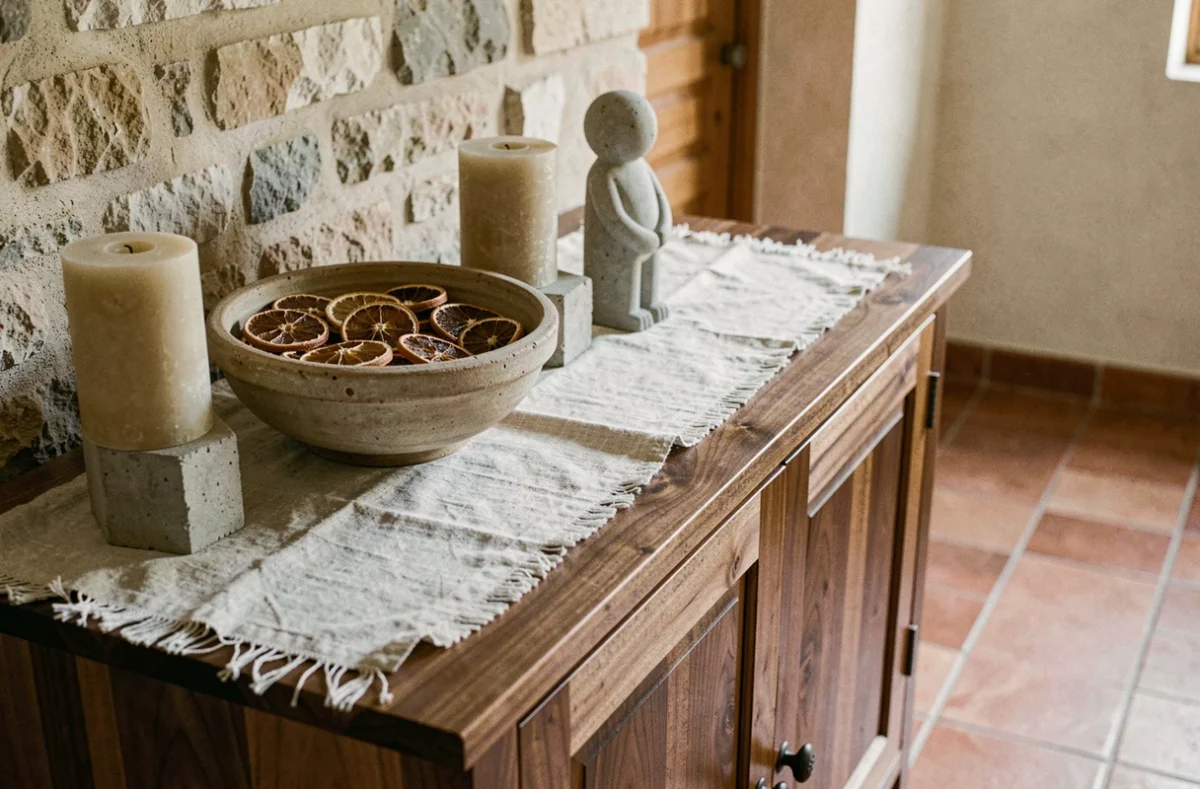
- If the surface (shelf, console table or coffee table) looks cluttered after adding it, remove one item. The odd-number rule (three or five objects per area) helps maintain visual balance
- Check that the materials work together: a shiny plastic object among wood and stoneware pieces will disrupt the warmth of the overall look
The goal isn’t a minimalist interior. It’s a space where every object has a reason to be there, whether aesthetic, practical or sentimental. A warm living room with eight carefully chosen objects will always have more character than one cluttered with twenty mismatched accessories.
A warm, inviting home isn’t measured by the number of cushions or how much you spend in shops. It comes down to getting the combinations right: a material that complements a colour, a flea-market find that works with an existing piece of furniture, soft lighting that brings out textures. Take the time to look at what you already have before adding anything.