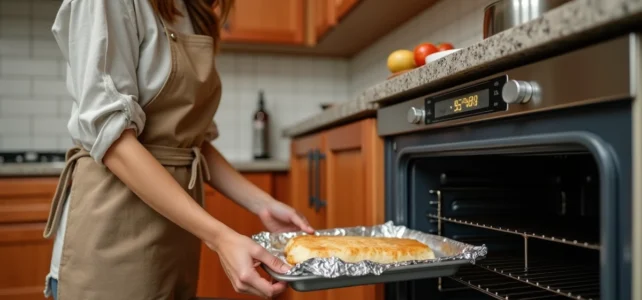
A burrito taken out of the refrigerator loses much of its appeal as soon as it is reheated improperly. The tortilla hardens, the cheese doesn’t melt properly, the vegetables become too mushy, or the meat turns stringy. The key when reheating a burrito lies less in the temperature reached than in managing moisture during cooking.
Comparison of reheating methods for a burrito
Each cooking appliance produces a different result on the tortilla, cheese, and meat. The table below summarizes the characteristics of each method to guide a quick choice.
| Method | Tortilla Texture | Cheese | Risk of Drying Out | Estimated Time |
|---|---|---|---|---|
| Conventional Oven | Crispy yet soft | Evenly melted | Low (with protection) | Several minutes |
| Skillet / Griddle | Crispy on the surface | Partially melted | Moderate | Several minutes |
| Microwave | Soggy, sometimes rubbery | Melted but uneven texture | High | Very quick |
| Convection Oven (air fryer) | Very crispy | Well melted on the surface | Moderate to high without precautions | Several minutes |
The conventional oven offers the best balance between tortilla texture and ingredient preservation. The skillet produces a similar result if the cooking is closely monitored. The microwave remains the fastest choice, but it also generates the most texture problems.
When looking to reheat a burrito at home without sacrificing the quality of the dish, the choice of method weighs as much as the preparation itself.
Reheating a burrito in the oven without drying it out
The oven remains the method that best preserves all the ingredients. The enveloping heat allows for a gradual temperature rise, which avoids hot spots next to still cold areas.
Preparation before baking
Wrap the burrito in aluminum foil, tightening it slightly. This wrap retains the steam released by the vegetables, cheese, and meat, keeping moisture inside the tortilla.
The aluminum foil acts as an individual lid that traps steam. Without this protection, the tortilla dries out on the surface while the inside remains warm.
Temperature Management
Preheat the oven to medium temperature. An oven that is too hot causes a harsh contrast between the outside and the center of the burrito, hardening the tortilla before the filling is heated. Keep the burrito wrapped for most of the cooking time, then remove the foil at the end to restore crispness to the surface.
This final unprotected step makes all the difference: the tortilla regains a slight crispness without the filling losing its tenderness.
Skillet method for a crispy burrito
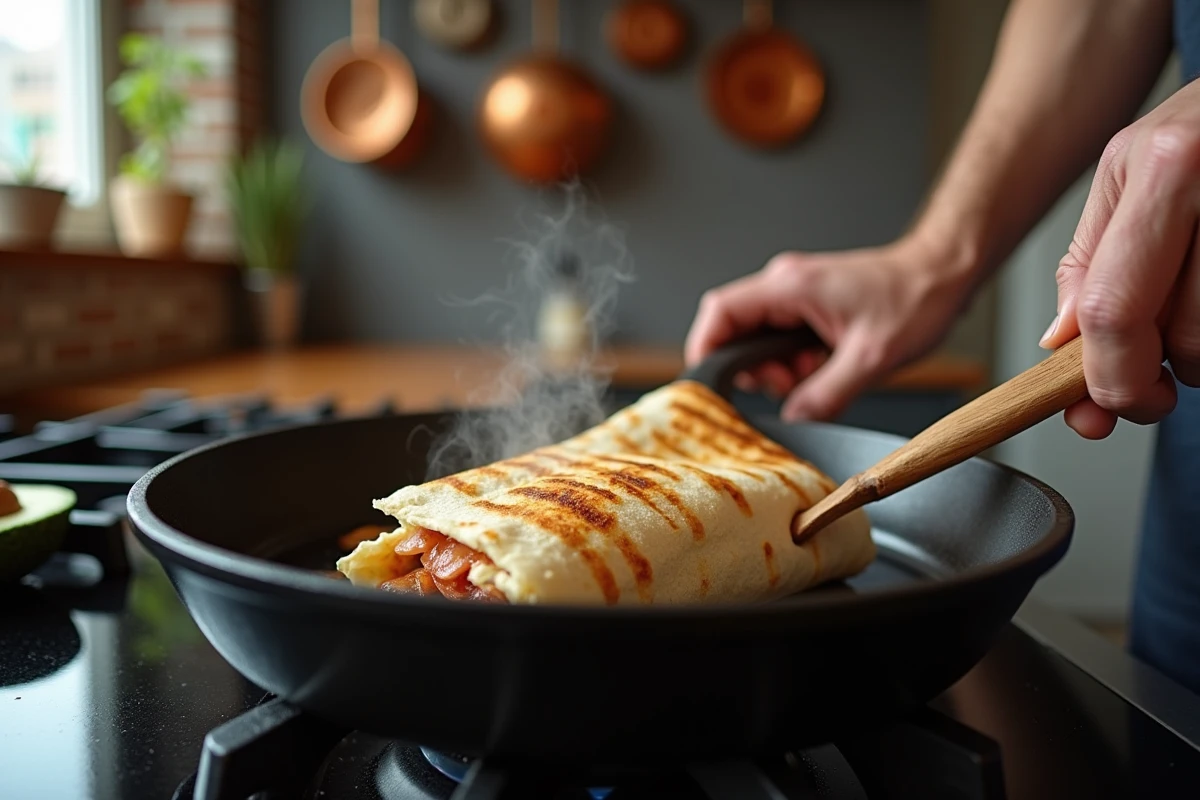
The skillet is particularly suitable for burritos with little sauce in the filling. Direct contact with the hot surface creates a golden crust on the tortilla.
- Use a heavy-bottomed skillet (cast iron or stainless steel) for even heat distribution, preventing localized hot spots
- Add a drizzle of oil or a knob of butter to promote the Maillard reaction on the tortilla without it sticking to the surface
- Cover the skillet with a lid during the first phase of cooking to create a steaming effect that warms the heart of the burrito
- Flip the burrito halfway through cooking to brown both sides evenly
The lid transforms the skillet into a mini steam oven. Without it, only the side in contact with the metal heats up, while the top remains cold.
However, this method requires constant monitoring. A few seconds of inattention are enough for the tortilla to go from golden to burnt, especially if the filling contains cheese that melts and escapes.
Microwave: limiting damage to the burrito’s texture
The microwave agitates the water molecules contained in the ingredients. The meat, vegetables, and tortilla lose moisture quickly, which explains the characteristic rubbery texture of a burrito reheated this way.
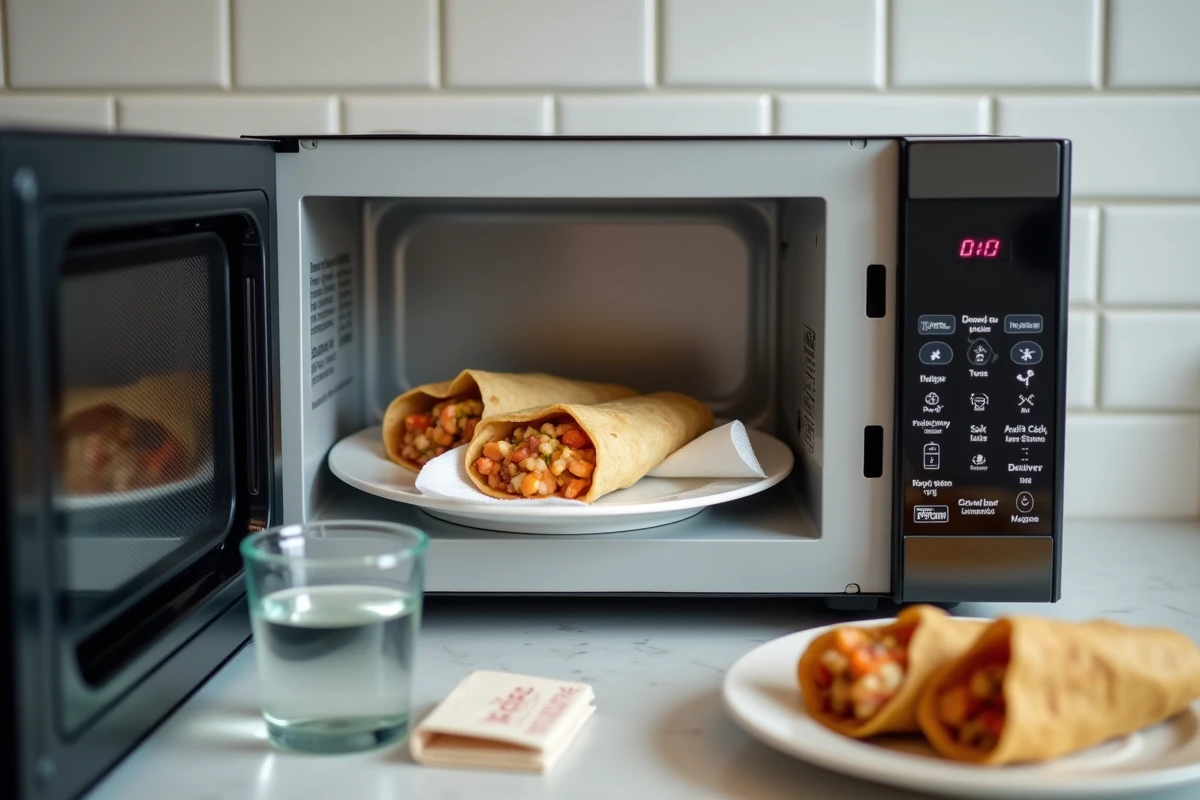
To mitigate this phenomenon, wrap the burrito in a slightly damp paper towel. The damp paper towel releases steam that partially compensates for the loss of water caused by the microwave.
Reheat in short intervals rather than in one long session. Between each interval, let the burrito rest for a few seconds to allow the heat to redistribute towards the center. This gradual approach reduces temperature differences between the filling and the tortilla.
The result will not rival that of the oven or skillet in terms of texture. The tortilla remains soft and the crispness is absent. For a quick meal where speed takes precedence over cooking quality, this method remains functional.
Common mistakes that dry out a reheated burrito
Some preparation habits exacerbate drying, regardless of the chosen method.
- Reheating a burrito directly from the refrigerator without letting it come to room temperature for a few minutes increases the total cooking time, exposing the tortilla to heat for longer
- Opening the oven or lifting the skillet lid too often lets out the accumulated steam, depriving the filling of its natural moisture
- Using too high a temperature to save time produces the opposite effect: the surface burns while the center remains cold, forcing an extension of the cooking time
The composition of the burrito also affects the result. A burrito rich in fresh vegetables (lettuce, tomato, guacamole) does not reheat well, regardless of the appliance. Removing raw toppings before reheating and adding them back afterward preserves their texture and flavor.
Spices and sauces behave differently depending on the method: a spicy salsa concentrates its flavors in the oven, while it partially evaporates in the microwave. Adjusting the seasoning after reheating helps restore the balance of the original dish.
The choice of method depends on the time available and the type of filling. A meat-and-cheese burrito without raw vegetables reheats very well in the oven or skillet. A burrito loaded with fresh ingredients benefits from being partially disassembled, reheated in parts, and then reassembled. It is the management of moisture, not the heating power, that makes the difference between an appetizing burrito and a dry cylinder.