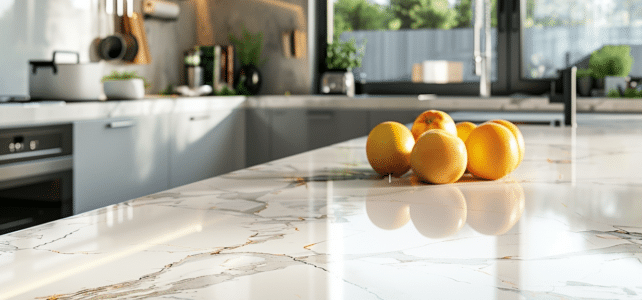
When selecting materials for applications where heat resistance is paramount, such as kitchen countertops or flooring, thermal properties are of utmost importance. Marble, a popular choice for its aesthetics, must be evaluated against competitors like quartz and granite, known for their durability. These materials are subjected to high temperatures, which may come from cooking utensils or direct sunlight exposure. Understanding their behavior under thermal stress is fundamental to ensuring both safety and longevity in living spaces.
Evaluation of the thermal resistance of countertop materials
The differences between marble, granite, quartz, ceramic, composite stone, and corian become notably apparent when subjected to heat. Granite countertops, made from natural stone, stand out for their exceptional tolerance to high temperatures. Unlike quartz, a composite made from acrylic resins and crushed quartz, which is sensitive beyond 150°C, granite maintains its integrity even when faced with direct and prolonged heat sources.
Quartz, despite this thermal sensitivity, offers a high resistance to impacts, scratches, and stains, making it appealing for modern kitchens where aesthetics and easy maintenance are sought. Its price, often higher than that of granite, reflects this modernity and the ability to adopt custom colors that align with current interior design trends.
In terms of hygiene, the characteristics of the materials should not be overlooked. The low porosity of quartz limits the accumulation of bacteria, an advantage shared with granite, provided that a sealer is applied annually to preserve its properties. Ultimately, the choices between these heat-resistant materials will depend on aesthetic preferences, maintenance practices, and the value placed on the durable and natural character of granite versus the sophistication and variety of quartz.
Detailed comparison: marble, quartz, granite, and alternatives
At the heart of contemporary kitchens, the countertop must be both aesthetic and functional. Therefore, the choice of material holds particular significance. Quartz, made up of 95% crushed quartz mixed with acrylic resin, is a popular choice for its easy maintenance and hygienic properties due to its low porosity. Its resistance to impacts and scratches is high, and its ability to repel stains is remarkable. Quartz falls into a price range higher than granite, justified by its modernity and the diversity of its customizable finishes.
Granite, the quintessential natural stone, displays a robustness that inspires confidence. Exceptionally heat-resistant, highly resistant to impacts and scratches, granite does require specific maintenance: the annual application of a sealer to prevent stains and maintain its hygienic properties. In terms of price, granite is often seen as a worthwhile investment due to its longevity and timeless aesthetics, characterized by relatively uniform colors.
Beyond these two giants of countertops, other materials are emerging, such as composite stones or corian, offering a broader palette of choices. These alternatives, often composed of a blend of natural and synthetic materials, aim to combine resistance, ease of maintenance, and aesthetics. Their resilience to heat varies, and they should be studied on a case-by-case basis.
The final decision for the consumer lies in balancing aesthetics, resistance, maintenance, and cost. Quartz and granite position themselves as leaders, each with its advantages: quartz for a modern and personalized kitchen, granite for unbeatable resistance and natural charm. The alternatives, on the other hand, find their place among those looking to reconcile budget and specific properties. Consider all these parameters for a choice that will contribute to the durability of your interior.